
Waste
[3.1] 3R (Reduce, Reuse and Recyle) Program for University Waste
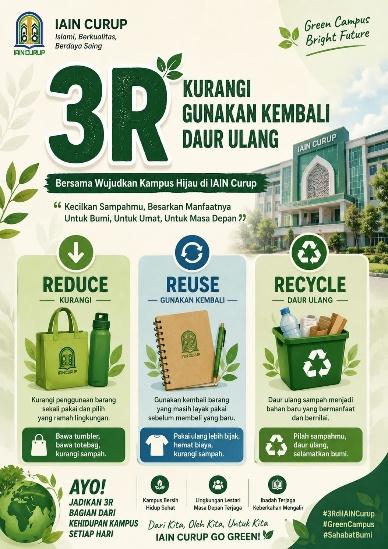
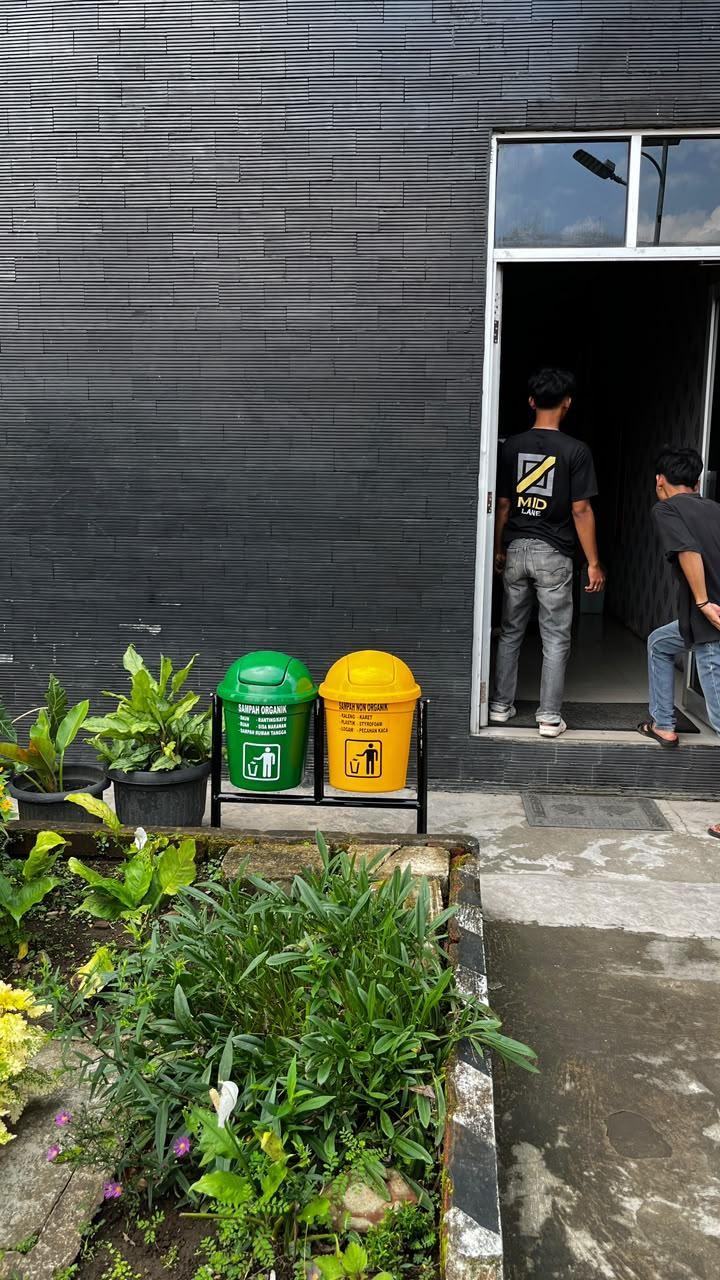
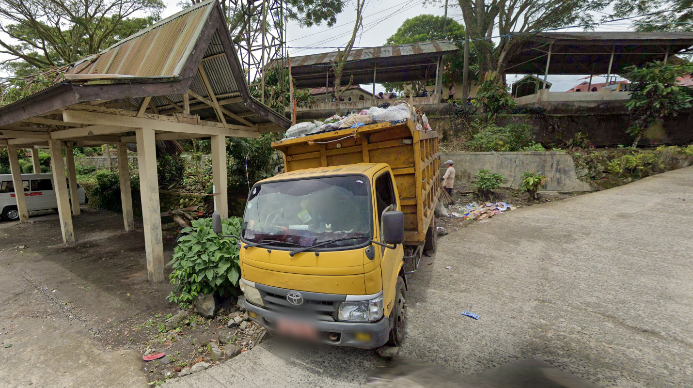
3R Program for University Waste (IAIN Curup, Indonesia)
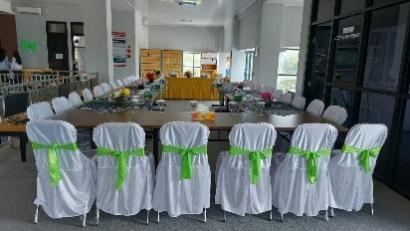
Reduce
IAIN Curup uses non-disposable items and goods
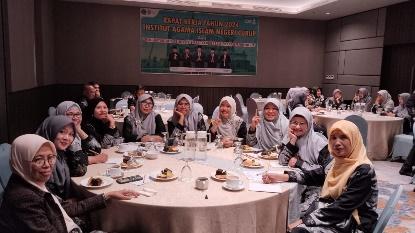
Reuse
IAIN Curup Campus chooses to use cutlery that can be used repeatedly or reuseable
Program for University Waste (IAIN Curup, Indonesia)
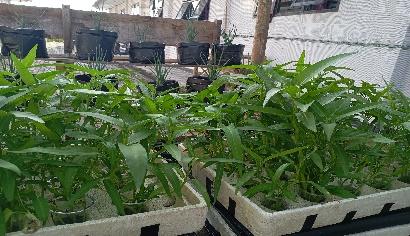
Recycle
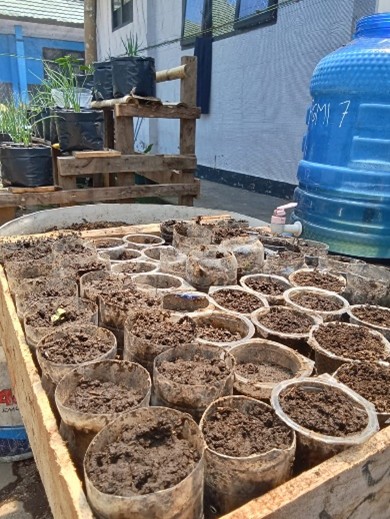
Utilizing plastic bottle waste as a planting medium
Description:
(Please describe the 3R program on your campus. The following is an example of the description. You can describe more related items if needed.)
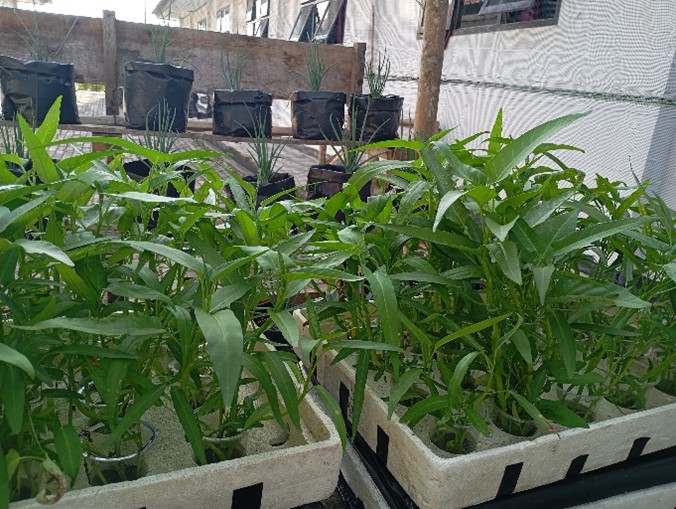
IAIN Curup provides trash boxes in each unit and later the trash will be collected by the cleaning service. The collected trash will be disposed of in the trash collection box at IAIN Curup. IAIN Curup collaborates with the Local Environmental Service, so that every morning the trash truck will collect IIAN Curup’s trash in the available trash collection box. To reduce and reuse waste, IAIN Curup only uses organic materials and equipment that is not disposable or can be reused. And for the recycle program, several lecturers and students recycle plastic bottle waste into planting media for useful plants, both medicinal plants and fruits or vegetables.
Additional evidence link (i.e., for videos, more images, or other files that are not included in this file):
https://drive.google.com/drive/folders/1wb7OCnDswWyIRjtPBdUl5Z0I1EovUZbw?usp=drive_link
[3.2] Total Volume of Paper and Plastic Produced This Year
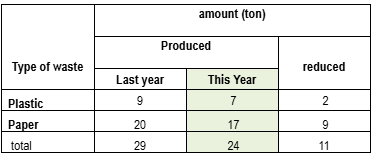
Description:
(Please describe total volume of paper and plastic produced this year on your campus. The following is an example of the description. You can describe more related items if needed.)
As a result of one day WFA implementation, total volume of paper and plastic produced this year is 24 tons, lower than last year.
Additional evidence link (i.e., for videos, more images, or other files that are not included in this file):
https://drive.google.com/drive/folders/1wb7OCnDswWyIRjtPBdUl5Z0I1EovUZbw?usp=drive_link
[3.3] Total Volume of Paper and Plastic Produced Last Year
Description:
(Please describe total volume of paper and plastic produced last year on your campus. The following is an example of the description. You can describe more related items if needed.)
As a result of one day WFA implementation, total volume of paper and plastic produced last year is 29 tons, higher than this year.
Additional evidence link (i.e., for videos, more images, or other files that are not included in this file):
https://drive.google.com/drive/folders/1wb7OCnDswWyIRjtPBdUl5Z0I1EovUZbw?usp=drive_link
[3.4] Program to Reduce the Use of Paper and Plastic on Campus (WS.2)
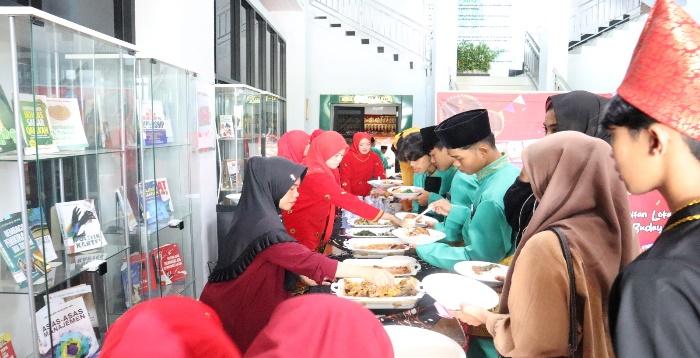
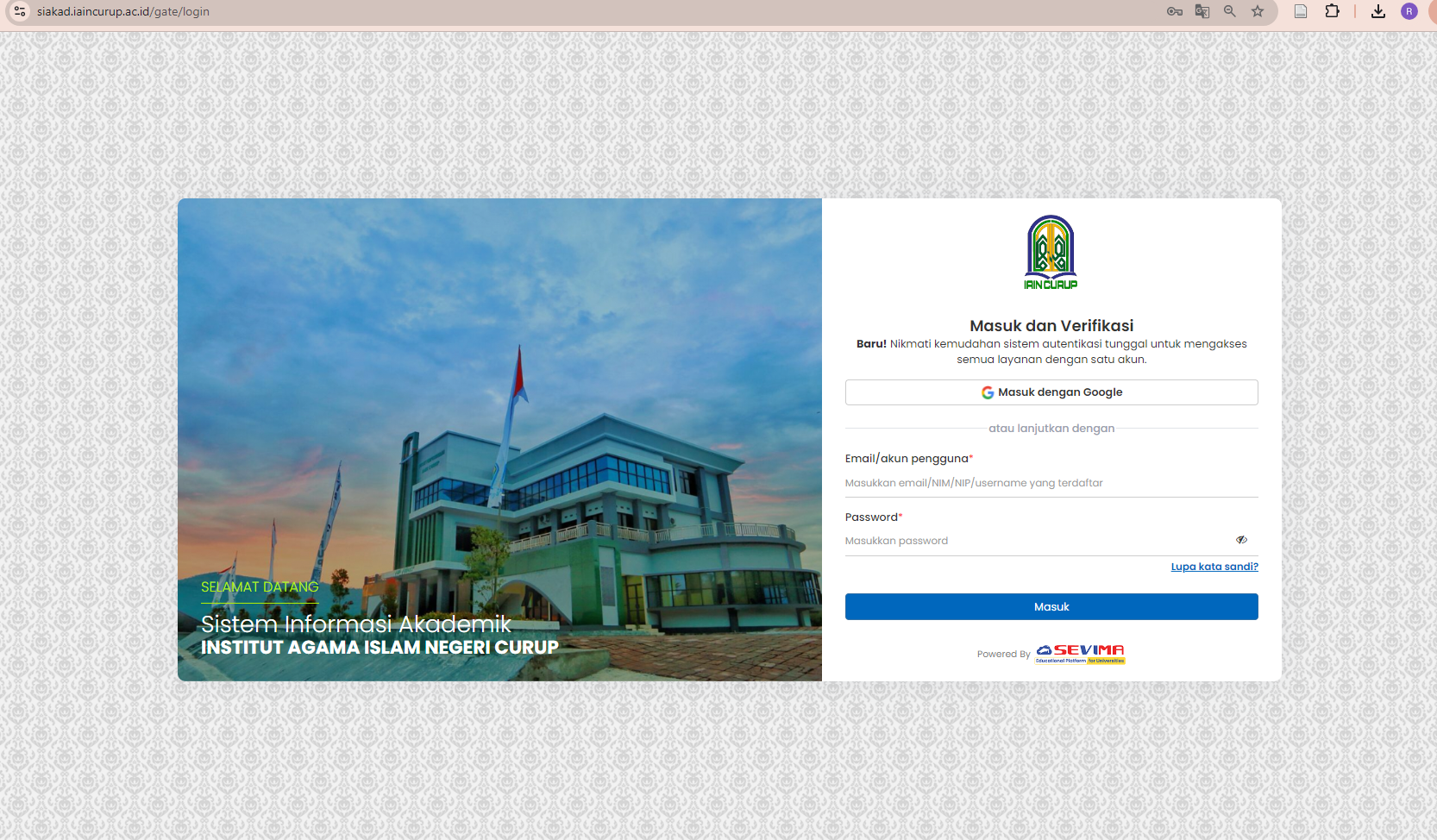
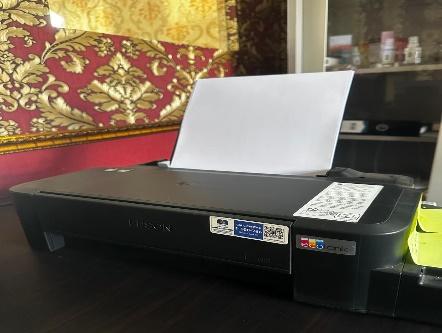
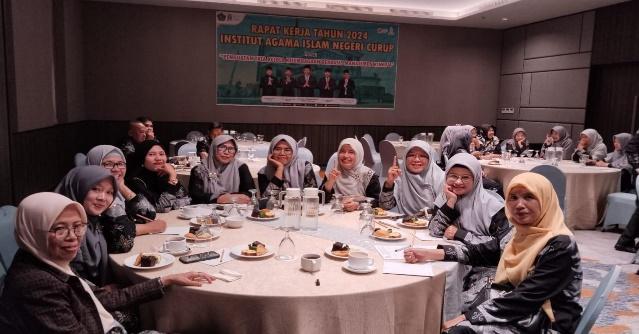
Program to Reduce the Use of Paper and Plastic in Campus (IAIN Curup, Indonesia)
Description:
(Please describe the program to reduce the use of paper and plastic on your campus. The following is an example of the description. You can describe more related items if needed.)
- IAIN Curup supports paperless system to reduce paper in daily workplace. It can reduce a lot of paper use that mean IAIN Curup can reduce CO2 emissions and save the world.
- Solutions of reusable paper in back office, e.g., using 2-side of paper, always recheck your data before print, use online system instead of hard copy, and uses online system in academic and administrative processes.
- IAIN Curup has a policy of “Reduce Reuse bottle plastic in the last 5 years. We can reduce by utilizing plastic bottle waste as a planting medium and reduce 50% of bottle plastic waste in university”.
- In every activity, IAIN Curup uses reusable eating utensils such as plates, spoons, forks, and glasses.
Additional evidence link (i.e., for videos, more images, or other files that are not included in this file):
https://drive.google.com/drive/folders/1wb7OCnDswWyIRjtPBdUl5Z0I1EovUZbw?usp=drive_link
[3.5] Total Volume Organic Waste Produced This Year
Description:
(Please describe total organic waste produced this year on your campus. The following is an example of the description. You can describe more related items if needed.)
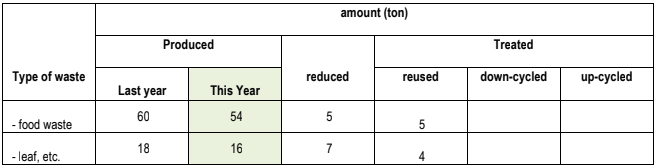
As seen from the table above, total volume organic waste produced this year is 70 tons.
Additional evidence link (i.e., for videos, more images, or other files that are not included in this file):
https://drive.google.com/drive/folders/1wb7OCnDswWyIRjtPBdUl5Z0I1EovUZbw?usp=drive_link
[3.6] Total Volume Organic Waste Produced Last Year
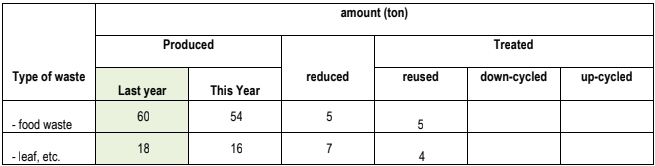
Description:
(Please describe total organic waste produced last year on your campus. The following is an example of the description. You can describe more related items if needed.)
As seen in the table above, total volume organic waste produced last year is 78 tons.
Additional evidence link (i.e., for videos, more images, or other files that are not included in this file):
https://drive.google.com/drive/folders/1wb7OCnDswWyIRjtPBdUl5Z0I1EovUZbw?usp=drive_link
[3.7] Total Volume Organic Waste Produced Treated This Year
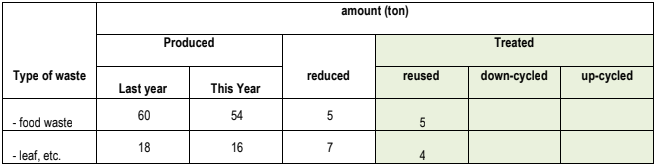
Description:
(Please describe total organic waste produced treated this year on your campus. The following is an example of the description. You can describe more related items if needed.)
As seen in the table above, total volume organic waste treated this year is 9 tons.
Additional evidence link (i.e., for videos, more images, or other files that are not included in this file):
https://drive.google.com/drive/folders/1wb7OCnDswWyIRjtPBdUl5Z0I1EovUZbw?usp=drive_link
[3.8] Organic Waste Treatment (WS.3)
Description:
(Please describe the program to treat organic waste on your campus. The following is an example of the description. You can describe more related items if needed.)
In IAIN Curup, organic waste is generated from buildings or each unit which is usually produced by all academicians of IAIN Curup. And each building or unit only has a trash box that has not been sorted. The trash is what will be taken by the cleaning staff to the IIAN Curup trash bin which will be collected every morning by a garbage truck from the Environmental Service from the Regency.
Additional evidence link (i.e., for videos, more images, or other files that are not included in this file):
https://drive.google.com/drive/folders/1wb7OCnDswWyIRjtPBdUl5Z0I1EovUZbw?usp=drive_link
[3.9] Total Volume Inorganic Waste Produced This Year
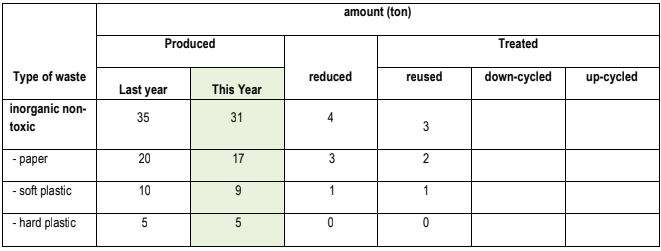
Description:
(Please describe total inorganic waste produced this year on your campus. The following is an example of the description. You can describe more related items if needed.)
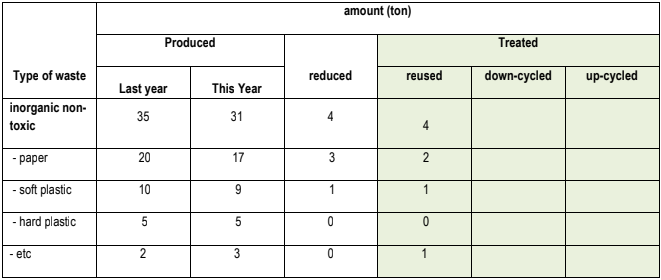
Total volume inorganic waste at IAIN Curup showed a slight decrease from the previous year. This decrease is closely related to the shrinking of campus activities, student participation, and the consumption of single-use products.
Additional evidence link (i.e., for videos, more images, or other files that are not included in this file):
https://drive.google.com/drive/folders/1wb7OCnDswWyIRjtPBdUl5Z0I1EovUZbw?usp=drive_link
[3.10] Total Volume Inorganic Waste Produced Last Year
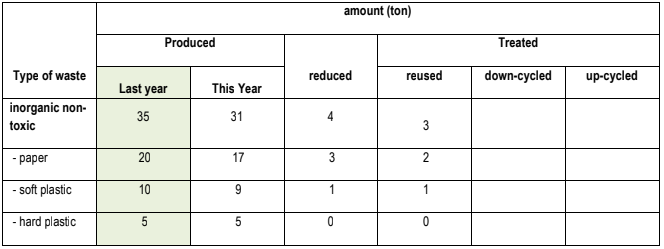
Description:
(Please describe total inorganic waste produced last year on your campus. The following is an example of the description. You can describe more related items if needed.)
Total volume inorganic waste at IAIN Curup showed a slight decrease from the previous year. This decrease is closelyrelated to the shrinking of campus activities, student participation, and the consumption of single-use products.
Additional evidence link (i.e., for videos, more images, or other files that are not included in this file):
https://drive.google.com/drive/folders/1wb7OCnDswWyIRjtPBdUl5Z0I1EovUZbw?usp=drive_link
[3.11] Total Volume Inorganic Waste Treated This Year
Description:
(Please describe total inorganic waste treated this year on your campus. The following is an example of the description. You can describe more related items if needed.)
As showed from the table above, total volume inorganic waste treated this year is 4 tons.
Additional evidence link (i.e., for videos, more images, or other files that are not included in this file):
https://drive.google.com/drive/folders/1wb7OCnDswWyIRjtPBdUl5Z0I1EovUZbw?usp=drive_link
[3.12] Inorganic Waste Treatment (WS.4)
Inorganic Waste Treatment (IAIN Curup, Indonesia)
Description:
(Please describe the program to treat inorganic waste on your campus. The following is an example of the description. You can describe more related items if needed.)
The waste that is reduced and reused is plastic bottle waste, because it has been appealed to all academics to bring their own drinking bottles from home and not use plastic bottles. And plastic bottle waste can currently only be reused as a planting medium as a practical material for PGMI study Program students for science learning courses.
Additional evidence link (i.e., for videos, more images, or other files that are not included in this file):
https://drive.google.com/drive/folders/1wb7OCnDswWyIRjtPBdUl5Z0I1EovUZbw?usp=drive_link
[3.13] Total Volume Toxic Waste Produced This Year
Description:
(Please describe total toxic waste produced this year on your campus. The following is an example of the description. You can describe more related items if needed.)
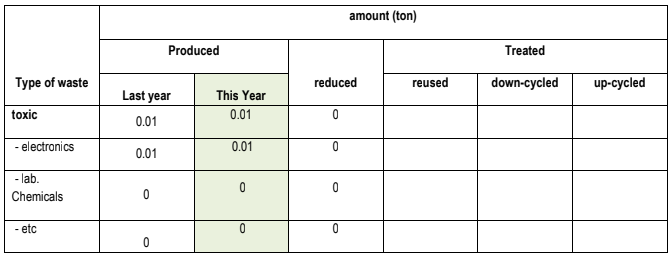
As showed from the table above, total volume toxic waste produced this year remain the same as the last year.
Additional evidence link (i.e., for videos, more images, or other files that are not included in this file):
https://drive.google.com/drive/folders/1wb7OCnDswWyIRjtPBdUl5Z0I1EovUZbw?usp=drive_link
[3.14] Total Volume Toxic Waste Produced Last Year
Description:
(Please describe total toxic waste produced last year on your campus. The following is an example of the description. You can describe more related items if needed.)
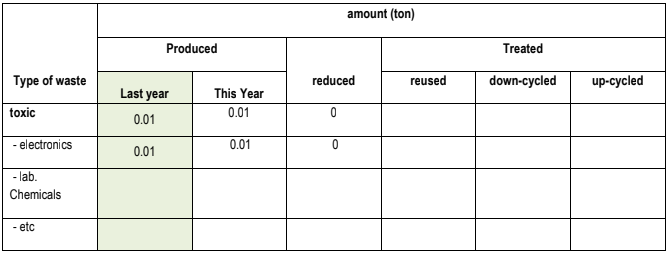
As showed from the table above, total volume toxic waste produced last year is 0.01 ton.
Additional evidence link (i.e., for videos, more images, or other files that are not included in this file):
https://drive.google.com/drive/folders/1wb7OCnDswWyIRjtPBdUl5Z0I1EovUZbw?usp=drive_link
[3.15] Total Volume Toxic Waste Treated This Year
Description:
(Please describe total toxic waste treated this year on your campus. The following is an example of the description. You can describe more related items if needed.)
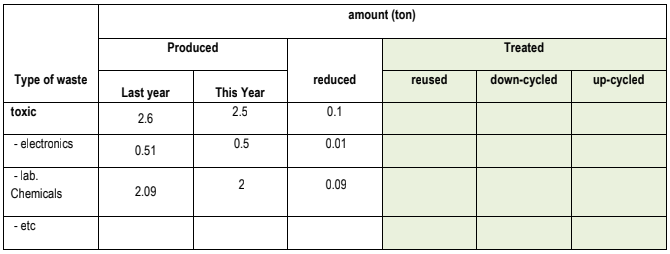
In IAIN Curup there is no reduce, reuse, and recycle program for electronic waste.
Additional evidence link (i.e., for videos, more images, or other files that are not included in this file):
https://drive.google.com/drive/folders/1wb7OCnDswWyIRjtPBdUl5Z0I1EovUZbw?usp=drive_link
[3.16] Toxic Waste Treatment (WS.5)
Description:
(Please describe the program to treat toxic waste on your campus. The following is an example of the description. You can describe more related items if needed.)
In IAIN Curup there is no reduce, reuse, and recycle program for electronic waste, and no toxic waste treatment.
Additional evidence link (i.e., for videos, more images, or other files that are not included in this file):
https://drive.google.com/drive/folders/1wb7OCnDswWyIRjtPBdUl5Z0I1EovUZbw?usp=drive_link
[3.17] Sewage Disposal (WS.6)
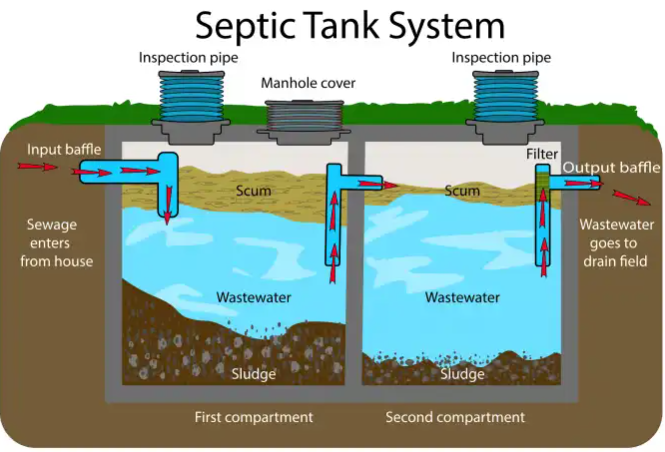
Example of Sewage Disposal (IAIN Curup, Indonesia)
Description:
(Please describe the sewage disposal on your campus. The following is an example of the description. You can describe more related items if needed.)
For toxic waste, IAIN Curup uses septic tanks as sewage disposal. Septic tanks are wastewater treatment systems used to manage liquid waste from toilets, bathrooms, and kitchens in homes or other buildings. This system consists of a closed tank made of concrete or plastic, which functions to accommodate liquid waste and allows the sedimentation and fermentation process by anaerobic bacteria. In the tank, solids will settle at the bottom, while processed liquid waste will flow out into the drain or soil percolation system, where it will be filtered and further processed. Thus, septic tanks play an important role in preventing environmental pollution by treating liquid waste before it is disposed of.
Additional evidence link (i.e., for videos, more images, or other files that are not included in this file):
https://drive.google.com/drive/folders/1wb7OCnDswWyIRjtPBdUl5Z0I1EovUZbw?usp=drive_link
[3.18] Impact of Waste Management Programs in Supporting the Sustainable Development Goals (SDGs)
IAIN Curup, Indonesia
Description:
(Please describe Impact of Waste Management programs in supporting the Sustainable Development Goals. The following is an example of the description. You can describe more related items if needed.)
IAIN Curup, a well-designed waste-management programme can contribute to multiple SDGs. The effective waste management in IAIN Curup supports SDG 3 (Good Health & Well-being), SDG 6 (Clean Water & Sanitation), SDG 11 (Sustainable Cities & Communities), SDG 12 (Responsible Consumption & Production), SDG 15 (Life on Land), and SDG 17 – Partnerships for the Goals such as:
| SDG 3 – Good Health & Well-being | Better waste collection, segregation and disposal reduces disease vectors, odour, vermin, and environmental pollution. For example, improper waste (especially in student housing, labs, canteens) can affect health. A campus programme that improves waste handling contributes to healthier campus environment. |
|---|---|
| SDG 6 – Clean Water & Sanitation | If waste isn’t properly managed, leachate or runoff can contaminate groundwater or surface water; proper infrastructure (bins, sorting, treatment, safe disposal) avoids this. |
| SDG 11 – Sustainable Cities & Communities | Universities are part of their local community; by improving campus waste behaviour, the institution can model sustainable consumption and production for the city/region (Curup/Bengkulu). Also, student & staff behaviour change can spill over into the surrounding community. |
| SDG 12 – Responsible Consumption & Production | Waste programmes emphasise the 3R’s (Reduce, Reuse, Recycle). These reduce the volume of waste, promote more sustainable consumption by students/staff, and can instil circular-economy thinking (materials kept in use longer). For example, literature on organic waste management in villages emphasises economic, social, and environmental dimensions. |
| SDG 15 – Life on Land | Waste dumped in landfills or illegal sites harms land ecosystems; microplastics, soil contamination affect flora/fauna. Good waste management lessens these negative impacts. For example, there is mention of policies to reduce hazardous waste and plastics at an Indonesian university. |
| SDG 17 – Partnerships for the Goals | A university can partner with local government, NGOs, community groups, and waste-pickers to implement programmes. Such partnerships enhance capacity, resources, and knowledge exchange in waste management. The literature on Indonesia emphasises both formal and informal policy and the role of community initiatives. |
Waste-management programmes at IAIN Curup can play a substantial role in advancing multiple SDGs — especially SDG 3, 6, 11, 12, 15 and 17. By establishing structured programmes (audit, infrastructure, behaviour change, partnerships, monitoring) and aligning them with measurable indicators tied to the SDGs, the institution can both reduce its environmental footprint and act as a model of sustainability in the region.
- SDG 13 – Lowering emissions from waste and enhancing climate action
- SDG 14 – Minimizing land and marine pollution from solid waste
- SDG 15 – Protecting ecosystems through sustainable waste practices
- SDG 17 – Building waste partnerships for policy and practice improvement
Additional evidence link (i.e., for videos, more images, or other files that are not included in this file):
https://drive.google.com/drive/folders/1wb7OCnDswWyIRjtPBdUl5Z0I1EovUZbw?usp=drive_link